Office as a Shelter or Control Tool: How Businesses Adapt to Crisis Conditions
The return of employees to offices amid energy crises requires a shift in management approaches. Workspaces must become reliable backup hubs rather than tools for supervision.
 👥Society
Photo: UNIAN
Key points
- Office as a backup hub instead of a strict control mechanism
- Importance of pre-established protocols for blackout scenarios
- Focusing on actual results rather than physical presence tracking
Modern challenges, including power outages, complex logistics, and infrastructure threats, are forcing Ukrainian companies to rethink traditional workflows. While returning to offices was once viewed as a standard organizational step, today it is a matter of operational business resilience. According to the European Business Association data from early 2026, a significant portion of enterprises face downtime due to blackouts, while the vast majority already rely on alternative generation sources. However, simply having a generator in the office solves only the basic technical problem.
The New Role of the Office and Clear Protocols
The primary shift lies in changing perspectives: the office ceases to be a tool for employee surveillance and becomes a secure operational rear. Staff members respond much better to a workspace that operates independently of scheduled outages as a backup hub with heating, internet, and device-charging capabilities. At the same time, experts emphasize the importance of task differentiation: fully remote work is not universal for strategic sessions or brainstorms, but rigid requirements for daily physical presence without considering transport disruptions only increase workplace stress.
- The office functioning as a supportive option rather than a mandatory control tool.
- Clear definitions of tasks that genuinely require physical offline collaboration.
- Pre-established protocols for handling prolonged communication and power blackouts.
Building effective operations in current conditions requires a balance between flexibility and mutual responsibility. The company provides basic infrastructural conditions, while the employee takes responsibility for handling unforeseen personal technical difficulties. Ultimately, the key criterion for productivity shifts away from tracking hours spent at a desk toward achieving concrete results despite objective daily hardships.
Source UNIAN — unian.ua/economics/other/blekauti-mosti-i-zatori-chi-obov-yazkovo-p… ↗
Read next
 🏙️City
The Culture of Repair as a Foundation for Community Resilience
Rebuilding Ukraine requires shifting from global planning to daily infrastructure maintenance, which is critical for Izyum during the winter season.
 🏙️City
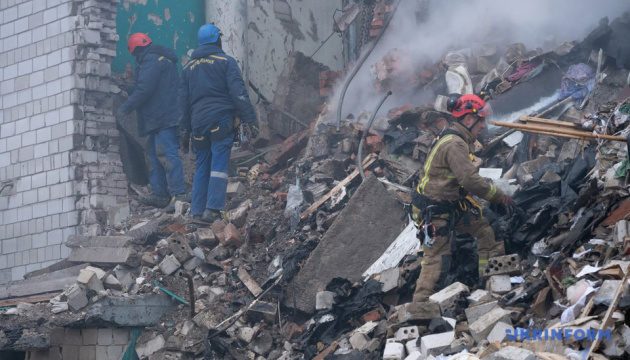
Child rescued alive from rubble of destroyed apartment building in Dymer
Rescuers pulled a child alive from the rubble of a five-story residential building in Dymer, Kyiv region, which was struck by Russian forces on the night of November 22. …
 🇺🇦Ukraine
Czech Prime Minister opposes funding Ukraine within the EU budget framework
Czech Prime Minister Andrej Babiš has criticized the proposed EU long-term budget for 2028–2034, citing concerns over support for Ukraine and funding cuts for his own cou…
 🎓Education
Financial Stress as a Health Threat: Scientific Findings
Research proves that persistent financial difficulties trigger chronic stress, which damages the body's immune and endocrine systems.
 💡Tech
Melamine Sponge in Household: How to Use the Popular Cleaning Tool Safely
Learn how to properly use melamine sponges for household cleaning and which surfaces should be avoided to prevent damage.
 🇺🇦Ukraine
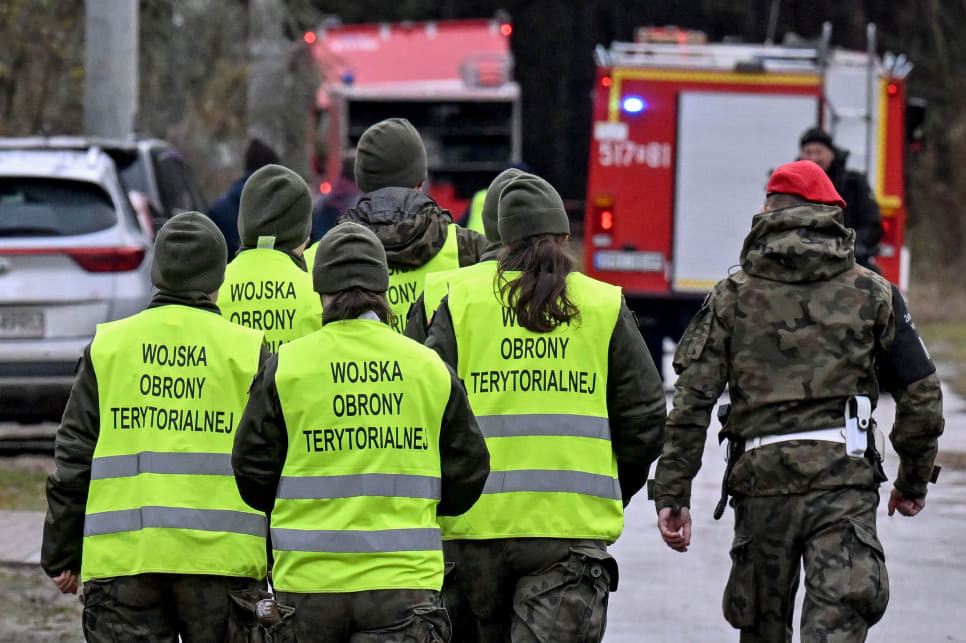
Poland Demands NATO Strengthens Eastern Flank Air Defense Following Missile Incursion
Following an incident involving Russian aerial objects breaching Polish airspace, Warsaw is convening the North Atlantic Council to discuss enhanced regional security.