Culinary tips: how to properly prepare grains for cooking
Experts explain whether you should rinse buckwheat, rice, and bulgur before cooking to preserve their nutritional value and texture.
 🧠AI Analysis
Photo: RBC-Ukraine
Key points
- Buckwheat requires minimal rinsing
- Rice should be rinsed to remove starch
- Bulgur does not require pre-treatment
Preparing grains for cooking is an essential step that affects both the taste and nutritional quality of a meal. While many home cooks are accustomed to rinsing all types of grains, experts emphasize that each product requires a specific approach.
Processing buckwheat and rice
It is recommended to rinse buckwheat with cold water 1-2 times to remove dust and debris. The only exception is pre-roasted buckwheat, which does not require this procedure. Rice, however, needs more attention: to achieve a fluffy texture, it should be rinsed 2-3 times until the water runs clear. This process removes excess starch, preventing the grains from sticking together.
Should you rinse bulgur?
Unlike buckwheat and rice, bulgur typically does not need to be rinsed. Since this grain undergoes steaming and drying during production, it can be added directly to water. Rinsing is only necessary if visible impurities are present.
- Rinse buckwheat 1-2 times.
- Rice requires thorough rinsing to remove starch.
- Bulgur is ready for cooking without pre-treatment.
Source RBC-Ukraine — styler.rbc.ua/ukr/useful/skilki-raziv-potribno-promivati-grechku-ris-17… ↗
Read next
 🇺🇦Ukraine
Lithuania rejects Russian allegations of using its airspace for drone attacks
The Lithuanian Ministry of Foreign Affairs has officially refuted claims by Russian authorities regarding the alleged launch of drones from its territory toward the Kalin…
 🎭Culture & Sport
Kitchen trends: how to transform your home space with modern design principles
Interior designers suggest moving away from bulky dining tables in favor of compact solutions that resemble cozy cafes.
 🛡️Security
Drone attack in Krasnodar: explosions and airport restrictions
A series of explosions and smoke were reported in Krasnodar, Russia, following a drone attack near military facilities.
 🇺🇦Ukraine
Donald Trump comments on the departure of press secretary Caroline Levitt
President Donald Trump expressed regret over the resignation of White House press secretary Caroline Levitt, who stepped down to focus on her family.
 🎓Education
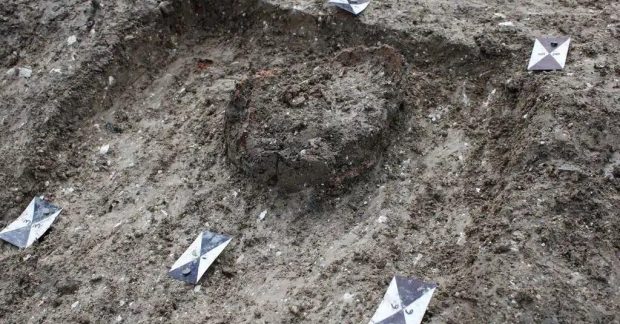
Unique Roman infant burial discovered in a ceramic vessel in Britain
Archaeologists in Buckinghamshire have unearthed a rare Roman-era infant burial featuring a vessel and ritual bird offerings.
 🇺🇦Ukraine
Donald Trump publicly reaffirms friendly ties with Vladimir Putin
U.S. President Donald Trump posted a photo with the Russian leader, labeling him as his friend. This move has drawn criticism from international allies amidst the ongoing…