Eight kilometers that changed history: how scientists solved a solar eclipse mystery
Researchers from Nagoya University have pinpointed the location of the ancient capital of the Lu state, confirming a 2,700-year-old solar eclipse record.
 🎭Culture & Sport
Photo: UNIAN
Key points
- Astronomers refined the location of the ancient city of Qufu.
- An 8-kilometer error prevented confirmation of the 709 BC eclipse records.
- The discovery helps scientists study the deceleration of Earth's rotation.
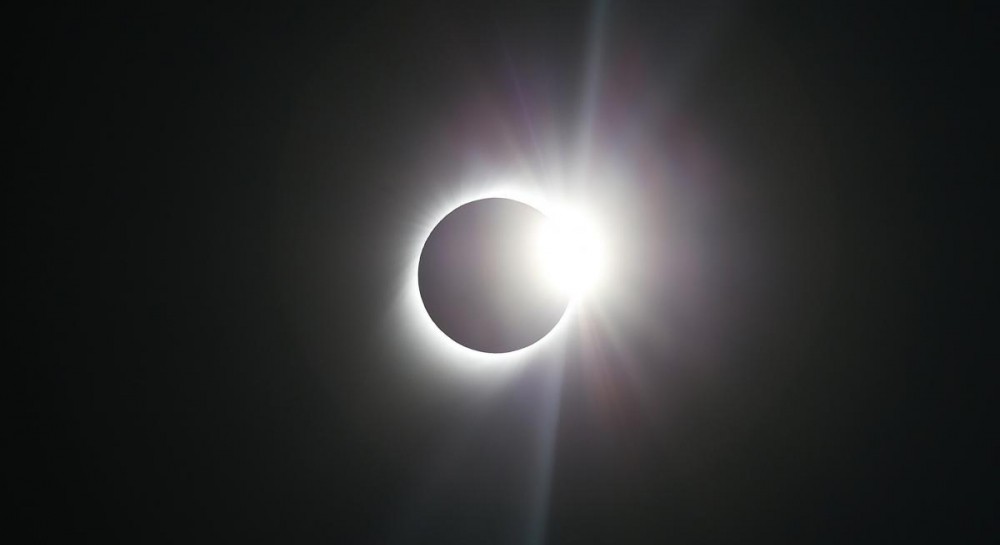
An international team of scientists has conducted a new study of an ancient solar eclipse described in Chinese chronicles. The event, dating back to 709 BC, had long sparked debate among astronomers because mathematical calculations did not align with historical records of the Sun going completely dark.
Location accuracy as the key to truth
The problem lay in the coordinates of Qufu, the capital of the Lu state. Modern calculations showed that a total eclipse would have been impossible from the current city's location, as a bright solar crescent would have remained. However, archaeological evidence pointed to an error: the ancient capital was situated about 8 kilometers away from the site previously used by researchers.
This small distance proved decisive. From the actual location of the ancient city 2,700 years ago, observers could have witnessed the total phase of the eclipse and the shimmering solar corona. This discovery not only confirms the authenticity of ancient manuscripts but also helps scientists better understand the dynamics of Earth's rotation in the past.
Source UNIAN — unian.ua/science/lishe-8-kilometriv-viddilyali-vchenih-vid-rozgadki… ↗
Read next
 🏛️Politics
Diplomatic maneuvers: E3 security advisors may visit Moscow to discuss the war
Representatives from France, Germany, and the UK are considering a visit to Russia to discuss a potential settlement of the conflict in Ukraine.
 🇺🇦Ukraine
Trade disputes between the US and Canada: Donald Trump's position
US President Donald Trump has stated that more work is needed to resolve trade relations with Canada, highlighting a significant trade deficit.
 💡Tech
Giving old tech a second life: how to repurpose your old monitor at home
Don't rush to dispose of your outdated monitor. There are several practical ways to adapt your hardware for new household tasks.
 👥Society
Woman in Ivano-Frankivsk region extinguishes fire alone after Russian missile strike
A 66-year-old resident of Zadnistrianske village saved her home from a fire after a Russian missile struck the building without detonating.
 🏛️Politics
Pistorius apologizes for sharp criticism of Pentagon official regarding Ukrainian strikes
German Defense Minister Boris Pistorius apologized for his emotional remarks directed at US official Elbridge Colby, while maintaining his stance on supporting Ukrainian …
 🛡️Security
Nine people injured in Russian strikes across Kharkiv region
Last Friday, Russian forces conducted a series of attacks on the Kharkiv region, resulting in civilian casualties, including children.